
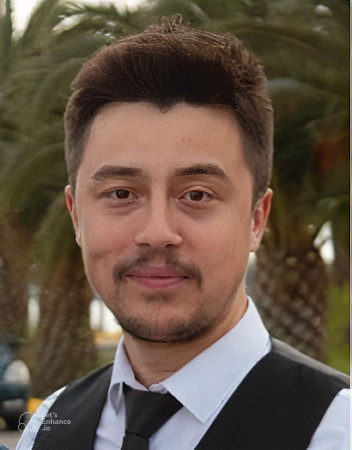
I'm Ercan Celen
- Software Developing Expert
- Electrical Electronics Engineer
- Age 32
- Address Nilufer, Bursa
- E-mail ercancelen37@gmail.com
- Tel - WhatsApp +90 531 432 20 10
- Driver Automobile
Hello, I am Ercan Celen and a seasoned software developer and an Electrical-Electronics engineer who was born and raised in Turkiye. I spent my formative years with my family, but I began living independently after high school to pursue a life of my own. During this period, I made efforts to diversify and improve myself in various ways. I engaged in engineering projects, both independently and in collaboration with friends. When I started university, my interest in software-related courses grew, and I became more focused on working on projects in this field.
Throughout my career, I seized opportunities to develop myself by taking on roles in different fields. This allowed me to acquaint myself with various technologies. While working with different technologies may have prevented me from fully specializing in a particular field, it has generally made it easier for me to see the bigger picture of projects and present innovative ideas. This enabled me to successfully bring comprehensive projects to life by combining the work of different components within a team. These experiences provided me with various opportunities in my professional career, such as project management and R&D team leadership, propelling me a step further.
These elements are the sum of what defines me, and you will find the projects I have undertaken as an individual and as a project manager in my portfolio.
Professional Skills
Portfolio
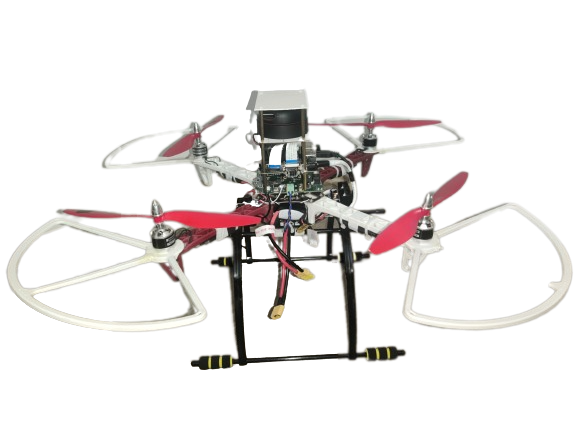
AUTONOMOUS INDOOR RECONNAISSANCE DRONE
This project has been submitted as a master's degree thesis at Uludağ University.
Project Technolojies
HARDWARE
SOFTWARE
Unmanned aerial vehicles in closed and open areas; can perform tasks such as reconnaissance, positioning, and mapping more easily for reasons such as avoiding obstacles more agile and moving faster. Exploration, mapping, and positioning are more complex in confined environments due to the narrow space and various obstacles. Some algorithms are used to increase the precision of the tasks, that is, to improve the accuracy of the data. One of these algorithms is the Kalman Filter. Thanks to this filter, the received data evolves into a more accurate graph. Positioning and mapping are done by passing the filtered data through SLAM algorithms. The operation has LIDAR as an external sensor. This sensor measures the distance to obstacles with high precision with the help of laser beams it sends at the speed of light. For this reason, laser-based SLAM, such as drones, are generally preferred in applications with high movement speeds.
Within the scope of the thesis, a four-engine (Quadcopter) design was studied for indoor exploration, and the essential equipment to create the drone was chosen as the first step. F450 chassis, XA2212 980KV brushless motor, and 40 A driver were selected in the design. 5000 mAh, 50C, 3S battery configuration was used as the power source. Drone flight control computer is designed with STM32F446RE (180MHZ) controller with high data processing capacity, 6DOF integrated accelerometer and gyroscope, and three-axis compass sensors. For mapping, data was taken with the RPLIDAR A2M6 sensor, and the data was processed using the Kalman filter to sharpen its accuracy. The processed data was arranged with the PID algorithm for drone flight safety and control and transferred to the engines. The 360 Degree LIDAR sensor data was processed via Jetson Nano, and the positioning task was studied. Positioning and raw data are sent to the Android tablet with a socket connection, and the SLAM algorithm is run. In addition, the image frames taken with the external camera on the drone are classified by recognition algorithms and shown on the map.
Key words: Drone, Indoor Space Mapping, Laser-Based SLAM, Image Recognition
Designed Flight Control PCB
The designed PCB board is based on the STM32446RE microcontroller and equipped with IMU InvenSense 6050 and HMC5883 sensors. It is designed to have built-in 5V and 3.3V voltage control and provide interfaces to all necessary external components that may be required. It features a direct pin-sharing interface with the JETSON Nano. Additionally, it incorporates interfaces for sensors such as a single-point laser-based altitude measurement sensor and a GPRS sensor, among others.
Flight Test
YOLO V4 tiny
Visualization of a Dataset Trained with YOLOv4-tiny for Recognizing Potential Issues Inside a Building.
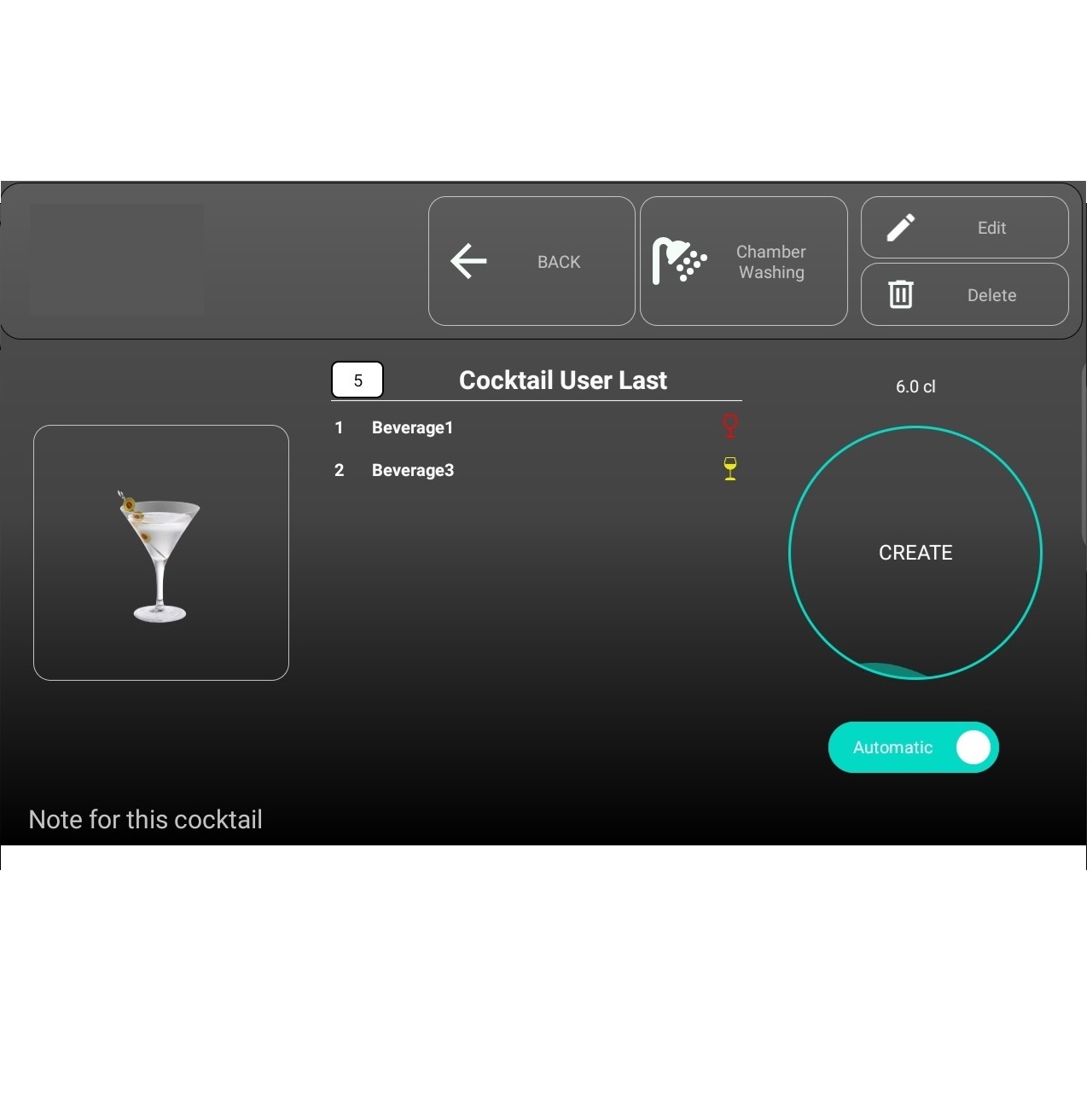
COCKTAIL MACHINE
This project was developed and delivered to meet the specific request of a company, involving both hardware and software components.
Project Technolojies
HARDWARE
SOFTWARE
The project controls a machine operated by an automatic logic system, which is controlled via an Android tablet. This machine can control 40 pumps and establish wireless connections through Wi-Fi remotely. The aim of the project is to operate efficiently, accurately, quickly, and with minimal human intervention in accordance with the recipes of cocktails that have been calibrated.
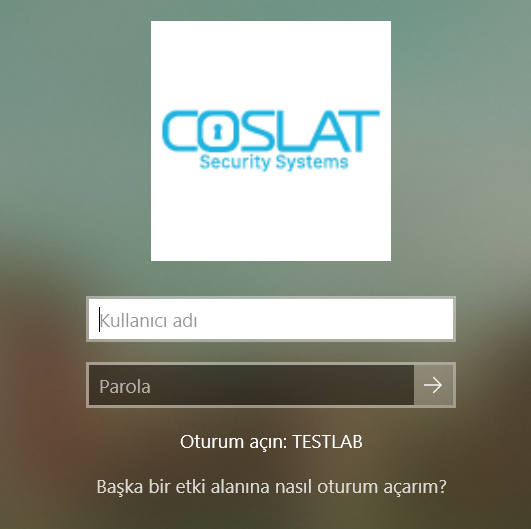
Windows 2 Factor Authenticator
A 2FA project has been developed for Windows, which allows LDAP users to add an extra layer of protection on their Windows computers using SMS or Google Authenticator.
Project Technolojies
A Two-Factor Authentication (2FA) project has been designed specifically for Windows, offering LDAP users an enhanced security solution for their Windows-based systems. This project incorporates the use of SMS or Google Authenticator as the second factor, ensuring an added layer of protection.
Additionally, this project involves several other crucial components:
SQLite Database Operations: The project employs SQLite for database management. This lightweight, embedded database engine securely stores and manages user data, authentication records, and related information.
Server-Side PHP: To facilitate the communication and authentication processes, server-side PHP scripting is used. This PHP code interacts with the LDAP directory services, validates user credentials, generates authentication tokens, and handles user requests securely.
Client-Side C++: On the client side, C++ programming is utilized to create a dedicated application. This client-side application interfaces with the user, generates the 2FA tokens and communicates securely with the server. The C++ code ensures a seamless and secure authentication experience for Windows users.
This comprehensive solution enhances security and ensures a robust and reliable authentication process, integrating SQLite, PHP, and C++ components to deliver a seamless 2FA experience on Windows systems.

Application Filter For Firewall
An open-source netmap-based approach was adopted, featuring a PHP interface for application-specific network rules, constituting the current operational framework.
Project Technolojies
In this project, three different approaches were attempted. Initially, a network-based design was implemented on the kernel side. During this design process, packets were inspected by hooking into incoming or outgoing traffic, and search optimizations using algorithms such as Boyer-Moore and Aho-Corasick were applied. As a result, a software solution was achieved that operated faster than existing app filters in the market. However, occasional issues arising from kernel-level structures, such as rare system resets, led to the decision to abandon kernel programming.
Secondly, an attempt was made to implement the project using the netmap structure, but the desired level of optimization was not achieved. (Netmap is a module that operates similarly to the hook method but sends the hooked packet to user space for processing.)
Thirdly, an open-source netmap-based structure was utilized, and a program was developed. An interface was created for this program using PHP, and network rules were established for applications. Currently, the project operates with this structure.

Put to Light, Pick by Light
"Put to Light" and "Pick by Light" systems are warehouse management solutions designed to enhance efficiency. In "Pick by Light," workers are guided by lights or indicators to select the correct items for orders, reducing errors and speeding up the process. In contrast, "Put to Light" assists in accurately placing incoming products into designated locations with the help of illuminated indicators. Both systems contribute to streamlined warehouse operations, particularly in large-scale facilities and distribution centers, by optimizing manual tasks and minimizing errors.
Project Technolojies
"Put to Light" and "Pick by Light" are systems commonly employed to optimize warehouse management and order picking processes.
"Pick by Light": In this system, each item in the warehouse shelves or bins is equipped with a light or indicator. The worker preparing the order is directed by these lights. The indicator specifies the item to be picked, guiding the worker to select the correct item. This speeds up the order fulfillment process and reduces error rates.
"Put to Light": This system focuses on accurately placing incoming products into designated locations within the warehouse. Each storage compartment is equipped with a light or indicator. The incoming product is placed in specific locations as directed by these illuminated indicators. This guidance process streamlines the product placement process within the warehouse, making it more efficient and error-free.
These systems are commonly used in large warehouses, distribution centers, and e-commerce operations. Light-directed processes optimize manual tasks, increase efficiency, and improve warehouse management by reducing error rates.
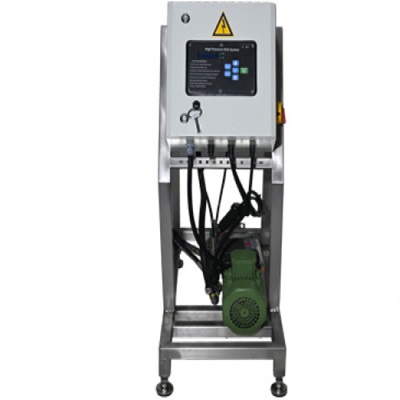
FogPump Control
Project Technolojies
In the FogPump Control Project, a microcontroller-based PCB was designed for the intelligent control of 400V AC motors. This PCB, coupled with an internal AC-DC converter, facilitates remote control via Bluetooth-based Android application and RF, featuring a crystal 2x16 display. It enables the operation of the pump motor in timer-based or on-off modes.

OTHER
I have other projects, ranging from small to large scale, similar to those in my portfolio. Additionally, I can execute and collaborate on projects of this nature, whether or not they involve these specific technologies. I am open to working on existing projects or exploring new opportunities for collaboration.
Work Experience
BG-TEK Information Security Technologies
Software Developing Expert
BG-Tek is an information security company that offers services such as pentest, hotspot, and firewall. Here, in the R&D department, I work as an algorithm writer with languages such as C, C++, PHP, and JavaScript required for the kernel space and user space.
ORKA IT Electronic
R&D Department Manager
Orka Elektronic is an R&D company working on RF communication (Wi-fi, 433Mhz), communication protocols (I2C,
Serial, Rs485, SPI, ModBus), PCB board design and software (Embedded system - ARM-PIC-ATMEL).
-
TitConn Information Technologies
R&D Engineer
Titcon IT is the company I work in the fields of embedded system PCB board designs, C and C++ software for these boards, and interface software with Java and Node.js.
Tara Robotic Automation
Intern Engineer
TARA Robotic Automation is an ever-growing robotic automation company that improved itself and became the market leader in recent years. We established a serious customer base in a short time with our engineering abilities and experience.
Education
Master Degree
Computer Engineering
Bursa Uludag University
Thesis - Autonomous Flying Reconnaissance Drone Indoors
Java - Android - Databases Education
Bahcesehir University
Bachelor
Electrical-Electronics Engineer
(3,15 / 4,0)
Karabuk Universitey
Electrical-Electronics Engineer
( Erasmus Program )
Lublin Technic University - Poland
Science
(77,25/100)
Ali Dilmen Anatolian High School
My Interests
- Bicycling
- Watch Movies
- Skating
- Shopping
- Playing Tennis
- Playing Bowling
- Swimming
Contact Me
- Address Bursa, Turkiye
- E-mail ercancelen37@gmail.com